
Sonata in A Major
I. Andante grazioso
Theme and Six Variations.
Mozart - Andante grazioso
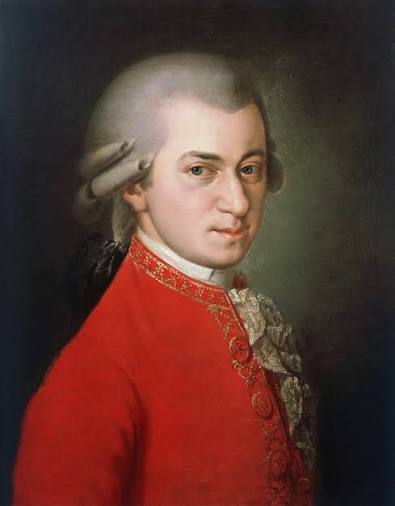
The History of Mozart's K. 331, I. Andante grazioso
Mozart's Piano Sonata in A major, K. 331 is one of his most distinctive keyboard works. Its first movement, marked Andante grazioso, is particularly unusual because it does not begin with the conventional sonata-form movement that one might expect from a classical piano sonata. Instead, Mozart begins with a graceful theme followed by six variations.
The movement progresses through a remarkable series of transformations: a simple and elegant theme is successively ornamented, rhythmically elaborated, placed into the minor mode, transformed into increasingly elaborate keyboard textures, slowed into an expressive Adagio, and finally brought to a brilliant conclusion.
The result is much more than a simple set of variations. Mozart creates an entire musical journey from a very small and apparently uncomplicated idea.
1. Mozart's Life When He Wrote K. 331
Wolfgang Amadeus Mozart was born in Salzburg in 1756. By the time he composed K. 331, he was no longer the astonishing child prodigy who had travelled around Europe with his father Leopold. He was a mature composer in his late twenties, establishing himself as an independent professional musician.
By this stage Mozart had already composed numerous symphonies, piano concertos, string quartets and operas, including Idomeneo. He was also developing the extraordinarily refined keyboard style that characterises his mature Viennese works.
Consequently, the graceful simplicity of the Andante grazioso should not be mistaken for the work of an inexperienced composer. Mozart was deliberately choosing simplicity as the starting point for an exceptionally sophisticated series of transformations.
2. When Was K. 331 Written?
The date of composition has been the subject of considerable scholarly debate.
The Traditional Dating: Paris, 1778. For many years K. 331 was generally dated to 1778, when Mozart was travelling in Paris. This dating was largely inherited from earlier editions of the Köchel catalogue, the catalogue of Mozart's works. K. 331 was traditionally grouped with the C major Sonata, K. 330, and the F major Sonata, K. 332, and these works were consequently associated with Mozart's Paris period. However, examination of Mozart's surviving manuscripts, handwriting and paper has made the 1778 dating increasingly difficult to maintain.
The Modern View. Modern scholarship generally places K. 331 considerably later, probably in the early 1780s, with around 1782–1783 being a particularly plausible period. The exact date and place of composition, however, cannot be established with complete certainty. The important point is therefore that the familiar statement "Mozart wrote K. 331 in Paris in 1778" should no longer be regarded as established fact.
3. The Manuscript Mystery
The history of the surviving manuscript is almost as fascinating as the music itself.
For many years, almost the entire original manuscript of K. 331 was believed to have disappeared. Only the final page, containing part of the famous Alla turca, was known to survive.
Then, in 2014, an extraordinary discovery was made at the National Széchényi Library in Budapest. Researchers identified four pages of Mozart's original autograph manuscript that had been held in the library's collection among previously unidentified musical fragments.
These pages contained a substantial portion of the first movement, the entire Menuetto and the beginning of its Trio. This discovery was extremely important because it provided scholars with Mozart's actual handwriting and allowed direct comparison with later copies and printed editions.
Unfortunately, the surviving autograph does not contain the complete first movement. The Budapest pages begin around Variation III, meaning that the original pages containing the theme and the first two variations are still missing.
4. The Publication of the Sonata
K. 331 was published in Vienna in 1784 by the important Viennese publishing firm Artaria. It appeared together with two other Mozart piano sonatas:
- K. 330 in C major
- K. 331 in A major
- K. 332 in F major
Mozart was involved in the preparation of the publication. This is significant because the printed edition was not simply an unrelated publisher's transcription of an old manuscript.
The rediscovery of the autograph has allowed researchers to compare Mozart's surviving manuscript with contemporary copies and the published edition. These comparisons reveal differences, including apparent printing errors and passages that may reflect changes made by Mozart during preparation for publication.
5. The First Movement — Andante grazioso
The first movement is marked Andante grazioso. Andante suggests a walking pace, while grazioso means graceful, elegant or pleasing.
Mozart does not begin with a dramatic Allegro. Instead, he presents a gentle theme in A major and 6/8 time. The opening is almost disarmingly simple. It sounds like a small, graceful song. Mozart then spends the remainder of the movement showing just how much musical variety can be extracted from that apparently modest idea.
The complete structure is:
- Theme
- Variation I
- Variation II
- Variation III — A minor
- Variation IV
- Variation V — Adagio
- Variation VI
6. The Theme
The theme is remarkably balanced. It consists essentially of two complementary sections, each of which is repeated.
The melody has a strongly vocal quality. It is uncomplicated enough to be immediately memorable, yet it provides Mozart with an ideal framework for variation.
This simplicity is important. Mozart does not begin with a technically complicated melody and then simplify it. He begins with something deliberately straightforward. The musical interest comes from the phrasing, articulation, ornamentation, rhythm, harmony and relationship between melody and accompaniment.
7. Variation I
The first variation retains the identity of the original melody while decorating its surface. The listener can still clearly recognise the theme, but the music has become more elaborate.
This establishes the fundamental principle that governs the movement: Mozart changes the character and surface of the music while preserving enough of its underlying structure for the listener to recognise its origin.
8. Variation II
The second variation introduces greater movement and activity in the keyboard writing. The underlying structure remains recognisable, but the accompaniment becomes more active and the music begins to feel less like a simple song and more like a piece written specifically for the keyboard.
9. Variation III — A Minor
Variation III produces one of the most striking changes in the entire movement. Mozart changes the mode from A major to A minor.
The fundamental musical structure remains connected to the original theme, but the emotional character changes dramatically. The brightness of A major is replaced by something darker and more introspective.
This is one of Mozart's characteristic techniques: a familiar musical idea is placed into a different harmonic environment and consequently acquires an entirely different expressive character.
10. Variation IV
Variation IV changes the keyboard texture again. The writing makes greater use of the different registers of the keyboard, including passages involving hand crossing and unusual distribution of the musical material between the hands.
The effect can become almost orchestral, with contrasting registers suggesting different instrumental colours.
This is especially interesting when the work is considered in the context of the late eighteenth-century keyboard. Mozart was writing for an instrument with a very different sound from the modern concert grand piano. Its lighter action, more limited sustain and more restrained dynamic range encouraged a different kind of musical expression.
11. Variation V — Adagio
After the increasing activity of the earlier variations, Mozart suddenly changes direction. The music becomes slow, highly ornamented and contemplative.
This is not simply the previous variation played more slowly. Mozart creates an entirely different expressive world. The melody is stretched out and decorated with elaborate ornamentation, giving the impression of a highly expressive vocal or instrumental performance.
Structurally, this variation acts almost like a pause in the movement. The listener is given time to absorb the musical material before Mozart launches into the final transformation.
12. Variation VI
The final variation changes the character once again. The original theme was in 6/8, but Variation VI moves into 4/4 time and becomes considerably more energetic.
The keyboard writing is faster and more brilliant, creating a strong contrast with the preceding Adagio. Mozart therefore ends the movement not by simply repeating the original character, but by transforming the theme into a brilliant keyboard conclusion.
13. The Overall Dramatic Shape
The six variations form a remarkably coherent progression:
| Section | Character |
|---|---|
| Theme | Simple and graceful |
| Variation I | Ornamented and decorated |
| Variation II | More active keyboard writing |
| Variation III | A minor — darker and more introspective |
| Variation IV | More elaborate and colourful keyboard texture |
| Variation V | Adagio — slow and contemplative |
| Variation VI | Fast, energetic and brilliant |
The movement therefore has a genuine sense of development even though it is not written in conventional sonata form.
14. An Unusual "Sonata"
The title Piano Sonata might lead us to expect a conventional first movement in sonata form. K. 331 does not provide one. Instead, its three movements are:
- Andante grazioso — Theme and six variations
- Menuetto — Minuet and Trio
- Alla turca — Allegretto
Thus none of the three movements follows the conventional first-movement sonata-form model. Mozart was therefore able to create a convincing three-movement sonata without relying on the standard formal structure that had become so characteristic of the Classical period.
15. "Sonata No. 11"
Mozart himself did not call this work "Sonata No. 11." The numbering was added later by publishers and cataloguers. The more precise identification is Piano Sonata in A major, K. 331 (K. 300i).
The designation K. 331 comes from the Köchel catalogue, the principal catalogue of Mozart's compositions. The revised designation K. 300i reflects later reassessment of the chronology of Mozart's works. "No. 11" is therefore a modern numbering system rather than a title supplied by Mozart.
16. What About the "Alla Turca"?
The famous Alla turca, often called the "Turkish March," is the third movement of K. 331, not part of the first movement. Its Turkish or Janissary character reflects the eighteenth-century European fascination with Ottoman military and musical styles.
Mozart had already exploited Turkish musical colour in his opera Die Entführung aus dem Serail.
The contrast between the famous Turkish finale and the intimate, graceful opening movement is one of the reasons the complete sonata is so distinctive. The first movement should therefore not be thought of merely as the introduction to the Turkish March. The Andante grazioso is a substantial musical work in its own right.
17. What Mozart Is Really Demonstrating
At the deepest level, the movement is a demonstration of what can be achieved with a very small musical idea. Mozart begins with a simple melody and asks a series of musical questions:
- What happens if the melody is decorated?
- What happens if the accompaniment becomes more active?
- What happens if the music is placed into the minor mode?
- What happens if the keyboard texture is completely transformed?
- What happens if the music is slowed down and heavily ornamented?
- What happens if the same material is turned into a brilliant finale?
In this sense, the movement is almost a masterclass in composition disguised as a graceful piano piece. The extraordinary achievement is that Mozart changes almost everything about the surface of the music while preserving the identity of the underlying theme.
18. Why the Movement Is So Interesting for a Pianist
The Andante grazioso can appear deceptively easy because its basic musical material is so clear.
But the difficulty is not simply playing the correct notes. The music requires the pianist to make the phrasing, articulation, dynamics and balance between melody and accompaniment sound natural.
Mozart provides relatively little opportunity to hide technical imperfections behind a large Romantic sound. Excessive pedal, uneven fingering, inappropriate accents or poorly controlled phrasing can become immediately apparent.
Conversely, when the phrasing and articulation are handled well, the music can sound remarkably effortless. That apparent effortlessness is one of the defining characteristics of Mozart's mature keyboard writing.
19. Historical Timeline
| Year | Event |
|---|---|
| 1756 | Mozart is born in Salzburg. |
| 1778 | The traditional dating later assigned K. 331 to Mozart's Paris period, although this dating is now considered problematic. |
| c. 1782–1783 | Modern scholarship places the composition much more plausibly in the early 1780s, although the precise date and place remain uncertain. |
| 1784 | Artaria publishes K. 330, K. 331 and K. 332 in Vienna. |
| 19th–20th centuries | The sonata becomes increasingly famous, particularly because of its final Alla turca. |
| 2014 | Four pages of Mozart's autograph manuscript are rediscovered in Budapest, containing much of the first movement and the entire Menuetto. |
| Today | K. 331 is regarded as one of Mozart's most distinctive keyboard sonatas, while the exact date and place of composition remain subjects of scholarly discussion. |
20. The Essence of the Andante Grazioso
If all of the historical details are stripped away, Mozart's achievement is remarkably simple:
He took one little tune and told six different stories with it.
The theme is graceful and almost childlike in its simplicity. Yet by the end of the movement it has been transformed through ornamentation, changes of texture, a move into the minor mode, an expressive Adagio and finally a brilliant conclusion.
That is what makes the Andante grazioso so remarkable. It is not simply a pleasant opening movement to a famous sonata. It is a carefully constructed demonstration of Mozart's extraordinary ability to take a simple musical idea and reveal an astonishing range of possibilities within it.